
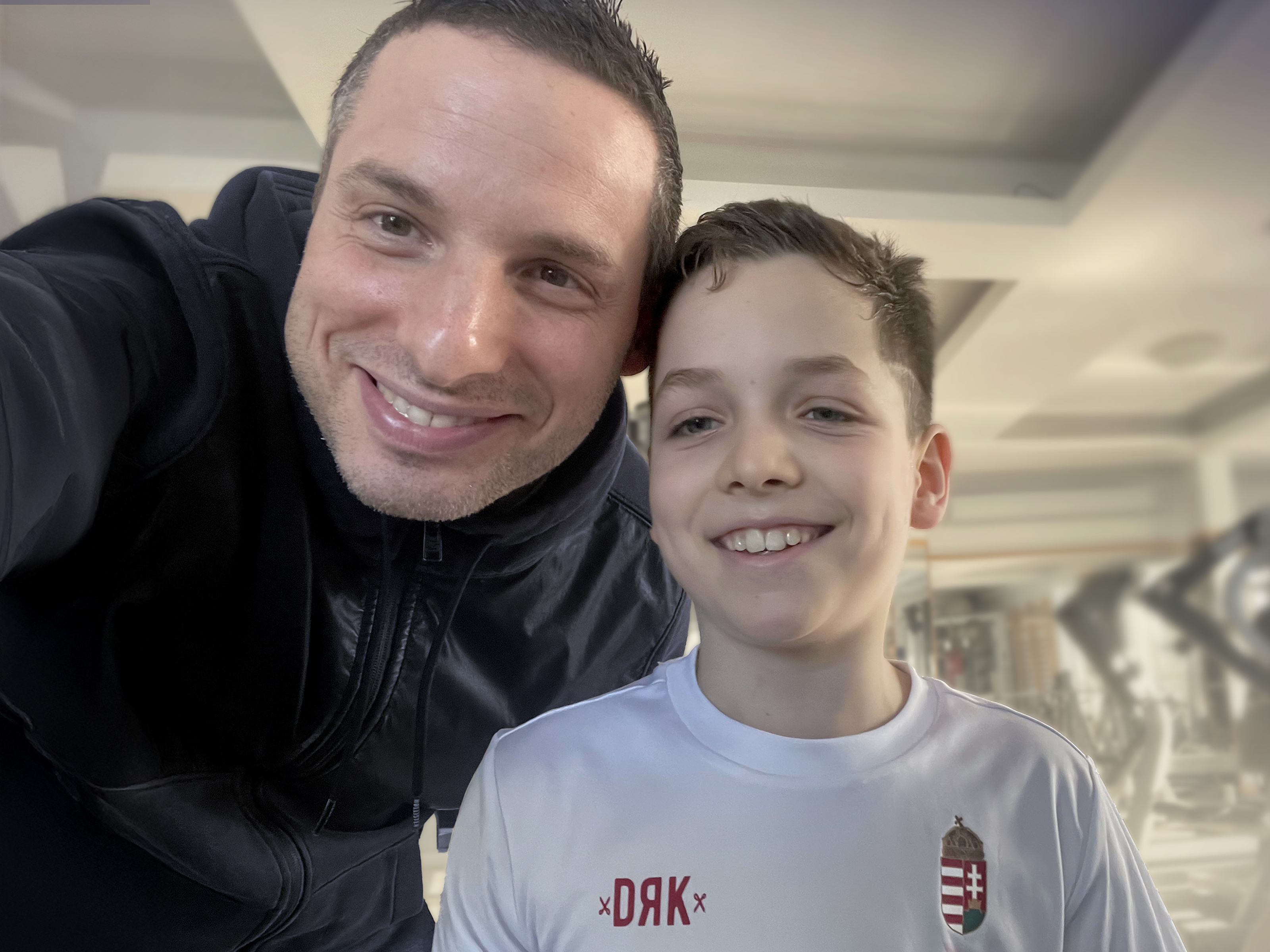
“No talent. I won’t train him.” That’s what a coach told me about my six-year-old son, after his very first lesson.
The coach wasn’t being cruel. He was being honest - brutally so. He only worked with kids who showed national-team potential, and in that first hour, my son didn’t look like one of them.
I’d spent the years before that scaling an AI retention company from zero to nine million in ARR. I understood data. I understood churn. And standing there, I understood something else: what had just happened to my son wasn’t a talent problem. It was a visibility problem. Nobody in that academy had a way to see what he actually had - not the coach, not me, not my son himself.
That moment is why I’m building Future Stars.
The Blindness Is the Business Model
Here’s what I didn’t know yet, standing in the academy: this happens constantly, and it’s quietly wrecking youth sport from three directions at once.
Coaches burn out. They spend five to ten hours a week managing parent anxiety - not coaching, managing anxiety - because parents have no other way to know if their kid is progressing. Seventy percent of players quit before they turn thirteen.
Parents are in the dark. Families invest anywhere from one thousand to thirty thousand dollars in a child’s development, and get back almost nothing they can actually see. No system tells them whether it’s working. They’re funding a black box.
Players quit - not for lack of talent. They quit because nobody could see what they had, so nobody could tell them, so they stopped believing it themselves.
If Even the Stars Almost Got Missed
Harry Kane was released by Arsenal at eight. Jannik Sinner wasn’t in a tennis pipeline until he was thirteen. Stephen Curry was told he was too small for every major program. Tom Brady was pick 199 - six teams passed on him.
Every one of these players was told they weren’t good enough, and made it anyway.
Nobody tracks the ones who didn’t.
If the players who became the best in the world nearly slipped through, what does that say about everyone who doesn’t have a Kane- or Brady-level exception to prove them wrong? That’s not a story about resilience. It’s a story about a system that has no way of seeing talent while it’s still developing - and loses most of it before anyone finds out.
What Future Stars Actually Does
We didn’t build another training app or another wellness app. We built the visibility layer that sits underneath all three stakeholders:
Coaches check in - thirty seconds per player
A fast, structured signal after practice, not another admin task on top of coaching.
Parents get a real report - zero extra work for the coach
The check-in data becomes something a parent can actually read and understand, automatically.
Players can add their own voice - optional
A reflection that sharpens the signal further, when a player chooses to give one.
Coaches generate the signal. The platform enriches it. Parents finally get to see it. That’s the whole loop: see more, know more, do more.
We’re live today with that first layer - behavioral data from coaches, parents, and players. Next comes physiological signal: wearables, HRV, movement, how a young athlete’s body responds under pressure - proof, not just impression. After that: intervention - personalized mental reps for the athlete, sharper intel for the coach, AI-generated reports for parents. Same skill, different delivery, sharper every week.
The Proof Is in the Behavior
Right now we work with five paying clubs and over 200 juniors. Parent NPS sits at 9.2 out of 10. Daily active usage runs at 25% - about four times the industry average for this kind of product.
At this stage, behavior is the signal, and the behavior says something simple: once people can see the development happening, they don’t want to lose that visibility again.
Why This, and Why Now
Every tool in this category picks one lane. Performance-intelligence platforms like Kitman Labs or Hudl are built for elite, pro-tier programs, and even where they do reach the athlete - Kitman’s own player app collects wellness input and schedules - there’s no parent layer at all. Team-management tools like TeamSnap or PlayMetrics handle logistics, not development. Generic wellness apps like Calm or Headspace don’t understand sport at all.
Nobody connects all three people - coach, player, and the parent actually paying for it - around one shared, honest picture of how a kid is developing. That’s the gap. That’s what we’re building.
Somewhere right now, another six-year-old is being told they don’t have what it takes - by a coach who has no way of seeing what’s actually there. Somewhere else, a parent who’s invested thousands of dollars and thousands of hours is about to hear “I want to quit,” with no idea why, because nobody ever showed them what was really happening.
They deserve to be seen. That’s why I’m building Future Stars.