
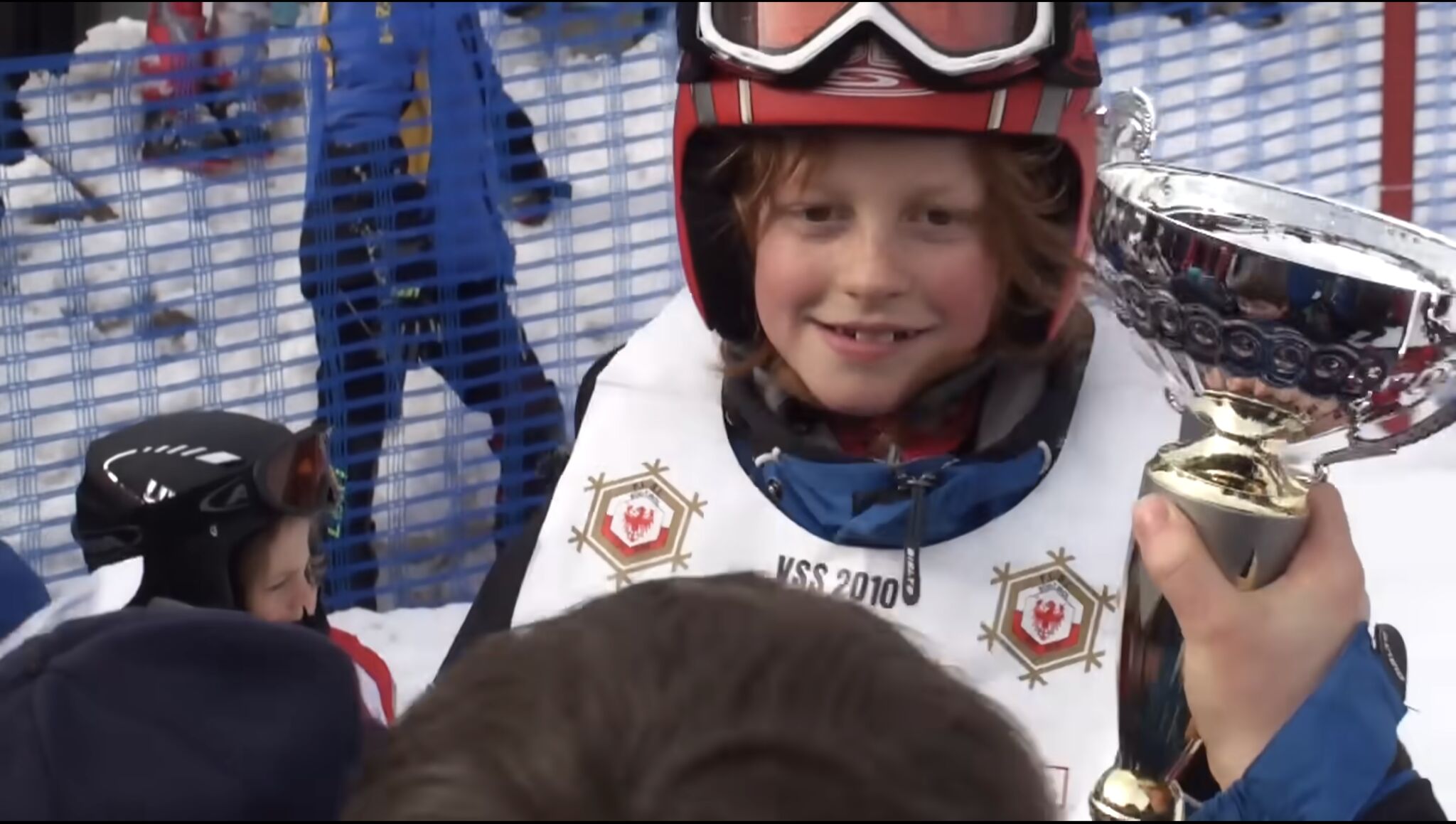
If you want to build the next Jannik Sinner, you don't make him play tennis twelve months a year when he's ten. You let him race giant slalom skis. You let him play football. That detail tends to get treated as trivia in Sinner's story. It shouldn't be - it's closer to the mechanism.
A System Pointed the Wrong Direction
Today's youth athletes are specializing in a single sport roughly two years earlier than the professionals who came before them did. That shift hasn't come from evidence that it works better. It's come from a set of incentives that all point the same direction: parents see other families committing early and don't want their child to fall behind, academies respond to what parents are asking for, and nobody involved is acting in bad faith. The pressure is just aimed at the wrong target.
The clearest sign of that misalignment is what the professionals themselves think. When asked whether they'd want their own child to specialize as early as they did, only one in five said yes. People who reached the top of their sport through early specialization mostly wouldn't recommend the path that got them there.
What the Research Actually Shows
Across 19 published studies on early single-sport specialization, not one found that it improved athletic performance. Not one. What the research does show is a fairly consistent pattern in the athletes who eventually reach the top: most of them played multiple sports as children and arrived at their primary sport later than their peers who specialized early. When they did specialize, they tended to be better movers, more resilient to injury, and more intrinsically motivated - largely because the choice was theirs to make rather than one made for them years earlier.
The NFL offers a useful data point outside the tennis and skiing anecdotes: 88% of NFL draft picks played multiple sports in high school.
The Clearest Large-Scale Case: USA Hockey
The strongest evidence isn't observational - it's a real intervention with a measured outcome. Before USA Hockey overhauled its development model in 2009, 43% of kids were quitting the sport by age 9. The organization made a change that ran directly against the instinct to add more hours and more competition: less early competitive play, more skill development, more fun, and more exposure to sport broadly rather than early narrowing.
The result was that retention improved, the talent pool got deeper, and USA Hockey became a genuine power in the sport. It's one of the few examples where an entire national system tested the alternative to early specialization at scale - and got a clear answer.
What This Means for How Academies Talk to Parents
The academies that will matter most over the next decade probably won't be the ones offering the most hours of single-sport training. They'll be the ones with enough conviction in what the evidence actually shows to tell a parent something counterintuitive: your child doesn't need more of one sport right now. They need more sport, period.
That's a harder message to deliver than "more reps, more results." It asks a coach or academy director to say something that runs against a parent's instinct to protect their child's competitive position. But it's a more honest message, and honesty is what actually earns trust over time. Families rarely stay with a program purely because of short-term results. They stay because they trust the people responsible for their child to see the whole athlete, not just the next tournament.
That's also, fundamentally, a visibility problem. A parent can only trust a program's judgment about pacing, specialization, and development if they can actually see what's happening with their child along the way - not just the scoreboard. Academies that build that kind of ongoing visibility into how they communicate with families are the ones in a position to make the harder, better-supported call, and have parents stay with them through it.