

For our 2026 Global Tennis Academy Report, we spent months talking to the people building youth sports development today - an investor, a performance architect, an academy director, a founder, a parent advocate, a VC. We asked them what actually keeps a young athlete in a program long-term. None of them talked about talent.
The Retention Thesis
Wayne Kimmel isn't a coach. As Managing Partner at SeventySix Capital, he's spent years watching what makes sports businesses succeed or fail from the outside - and his read on youth athletics applies well beyond any one sport.
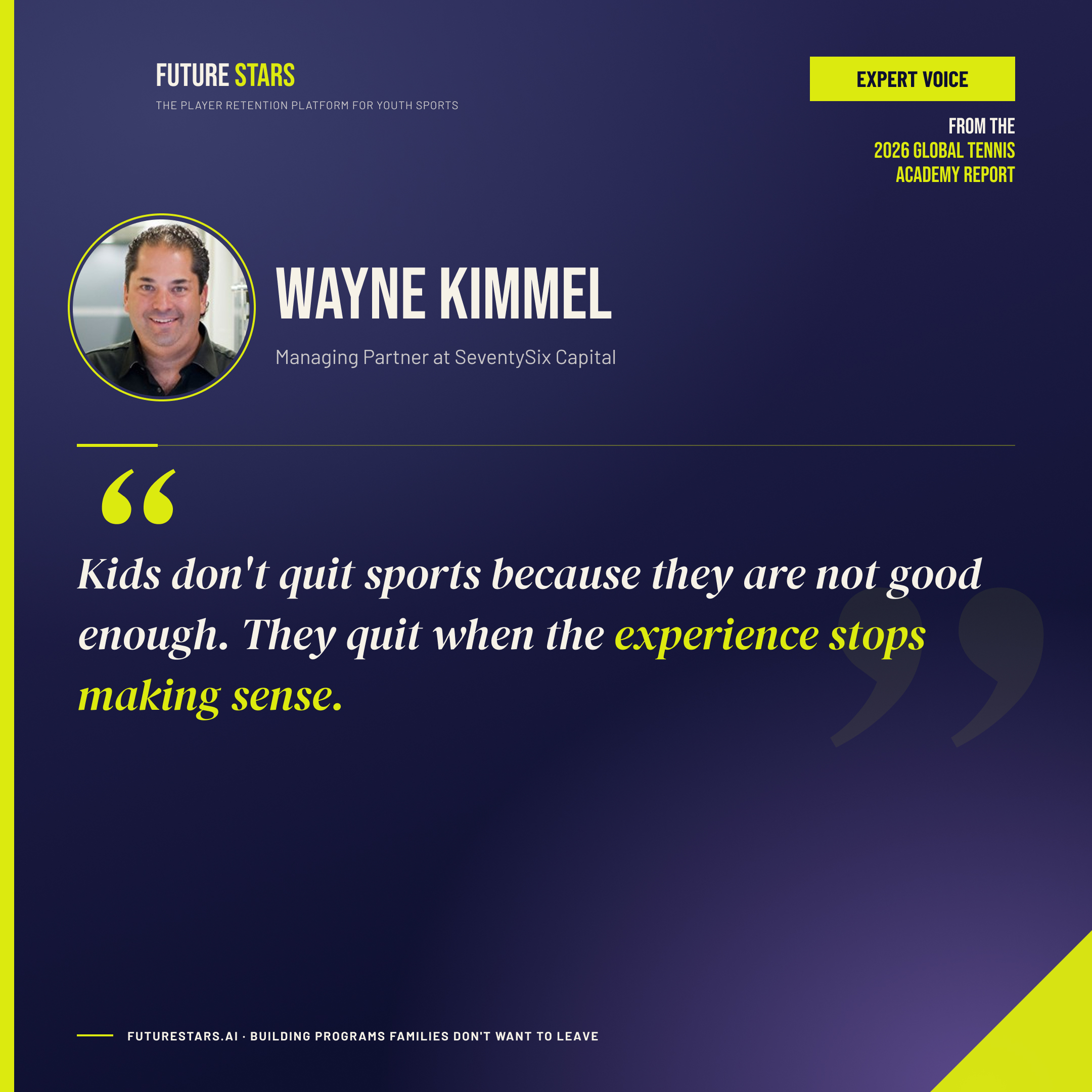
It's a simple line, but it reframes the entire retention problem. Programs spend most of their energy on the part that was never really at risk - the coaching. The part that quietly drives families out the door is everything around it.
The 23 Hours Nobody's Tracking
Duey Evans, a performance architect who has spent his career studying how development actually compounds, put a number on the gap.
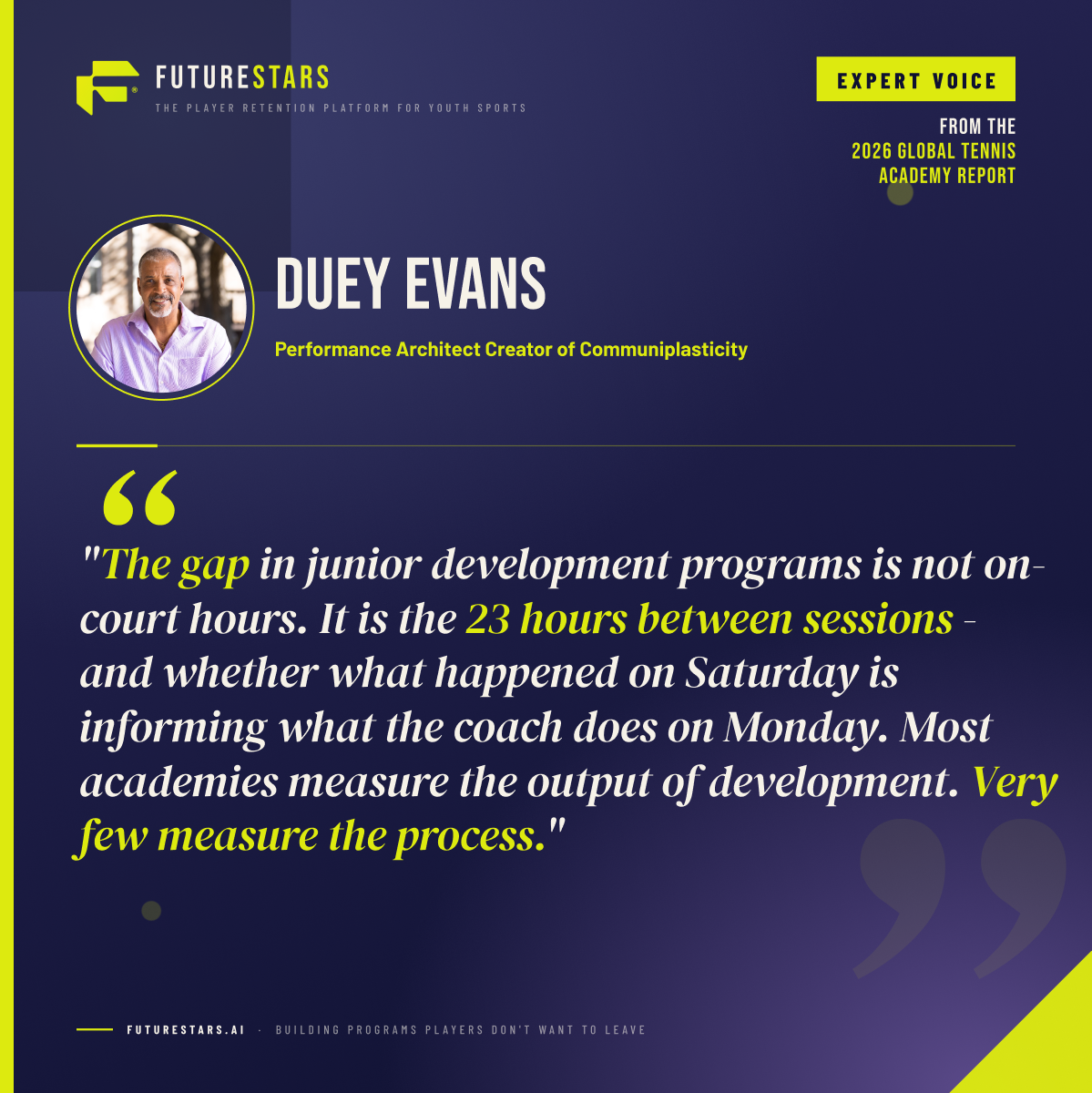
Most programs can tell you an athlete's ranking, their win-loss record, their stats. Almost none can tell you what happened to that athlete between Saturday's competition and Monday's session - whether a loss shook their confidence, whether a conversation in the car made things better or worse. That's the layer Evans is pointing to, and it's the layer that decides whether an athlete shows up next season.
What Directors Think Families Know
Brenton Barker, an international governing executive who has sat across the table from program leadership around the world, sees the same blind spot everywhere he looks.
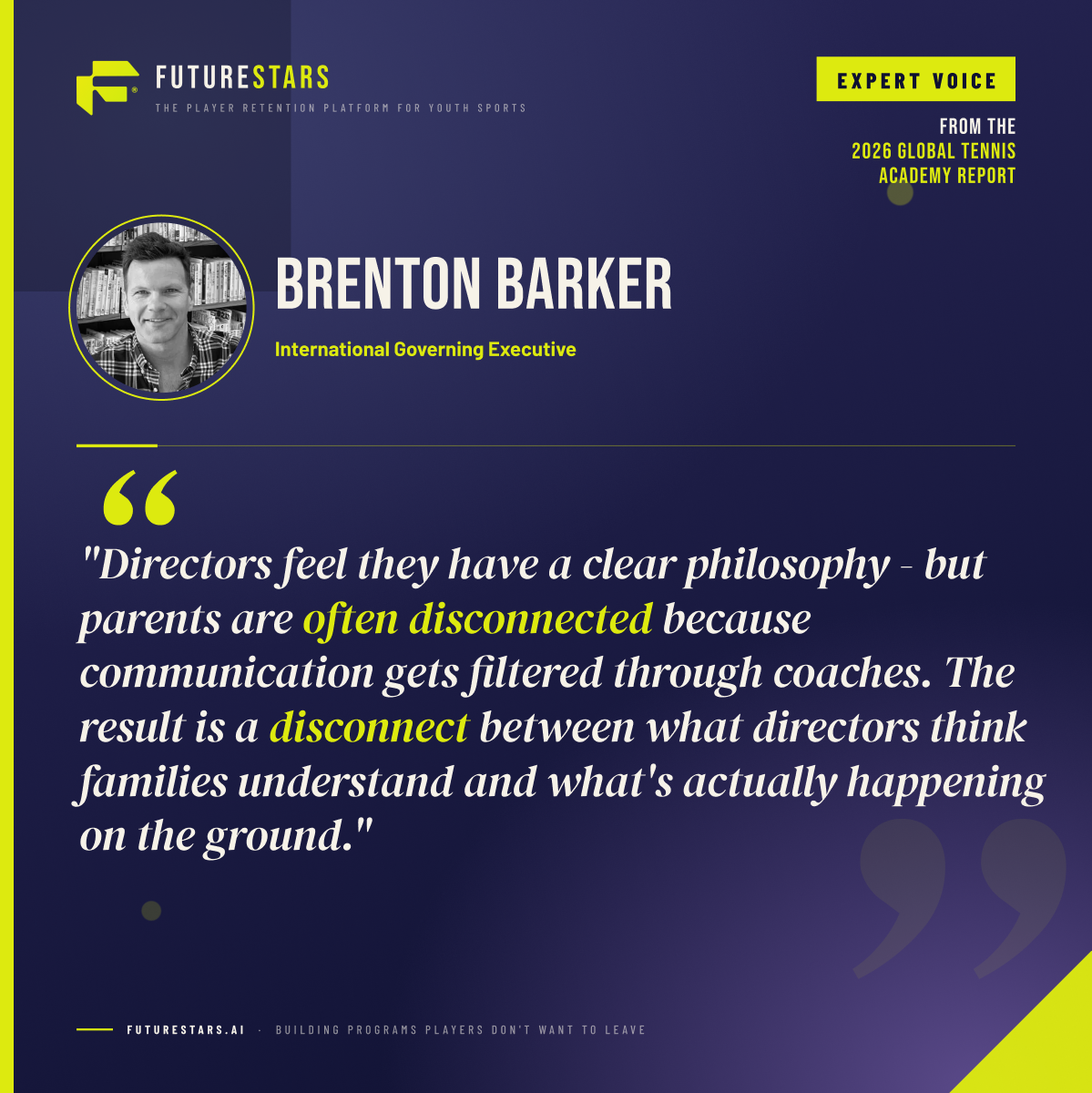
Every director we spoke with could articulate their development philosophy clearly and confidently. Almost none of that philosophy reaches parents intact. It passes through a coach, gets compressed into a two-minute pickup conversation, and arrives at the family as fragments. The director isn't wrong about their program. They're wrong about how much of it actually lands.
The Hardest Age Is a Team Sport
Emilio Sanchez Vicario has built one of the most respected academy brands in tennis, but the pattern he's describing shows up in any sport once athletes hit adolescence.

Notice what he's optimizing for. Not just competitive results - alignment between a parent and a child who are navigating adolescence together, often for the first time, with sport as the pressure cooker. Programs that treat this as a coaching problem alone are missing half of what actually keeps a family around.
The Emotional System Nobody Puts in a Report
Iñaki Etxegia runs the Ferrero Academy day to day, and when we asked him what's genuinely hardest to manage, his answer wasn't about scheduling or results.
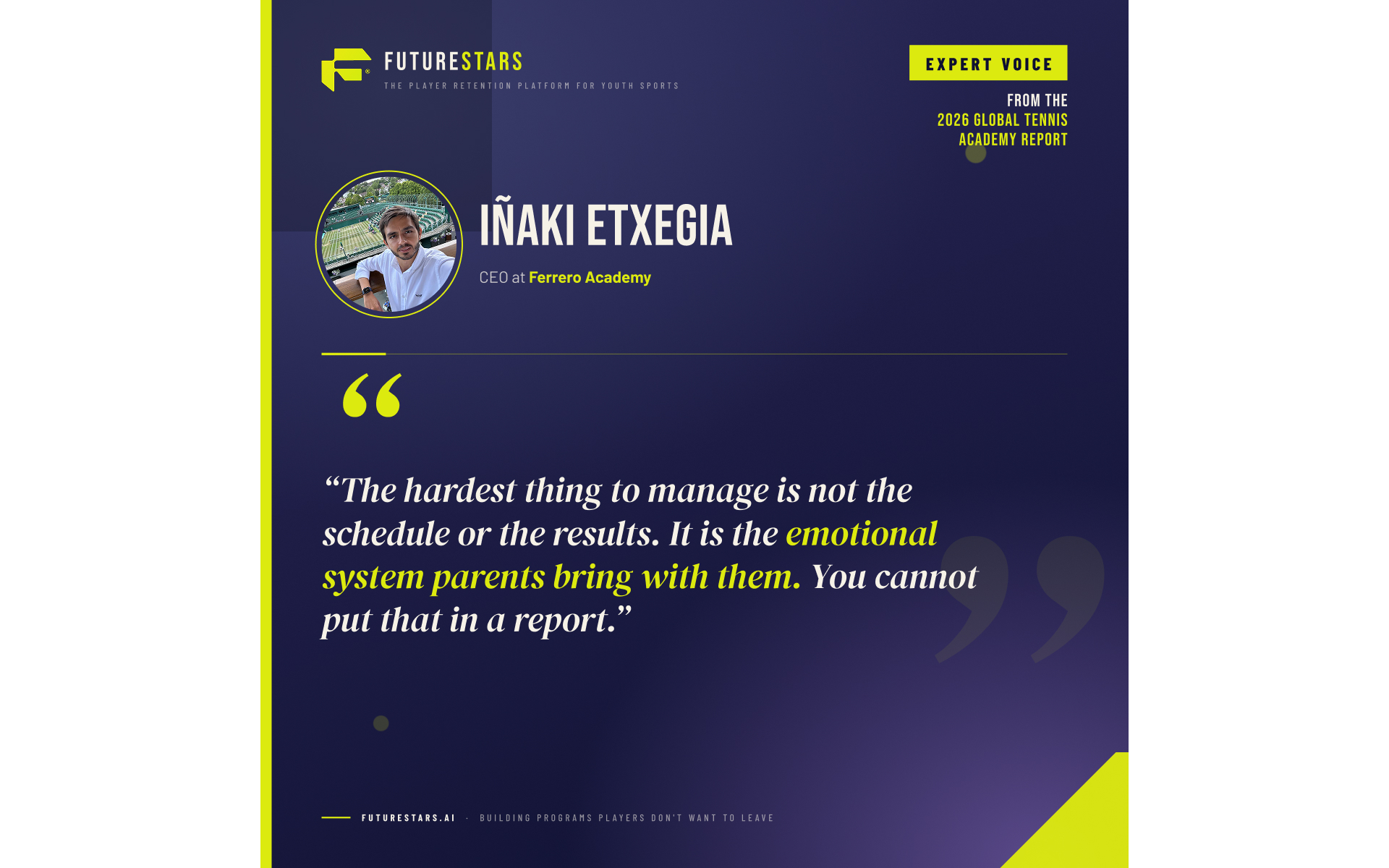
That last line is worth sitting with. Programs are good at measuring what's measurable - drills, competitions, standings. The thing that actually determines whether a family stays or leaves is much harder to quantify, and most have no structured way to even see it, let alone manage it.
Marketing vs. Development
Lisa Stone founded Parenting Aces to help sports parents navigate exactly this kind of terrain, and she's blunt about where families get burned.
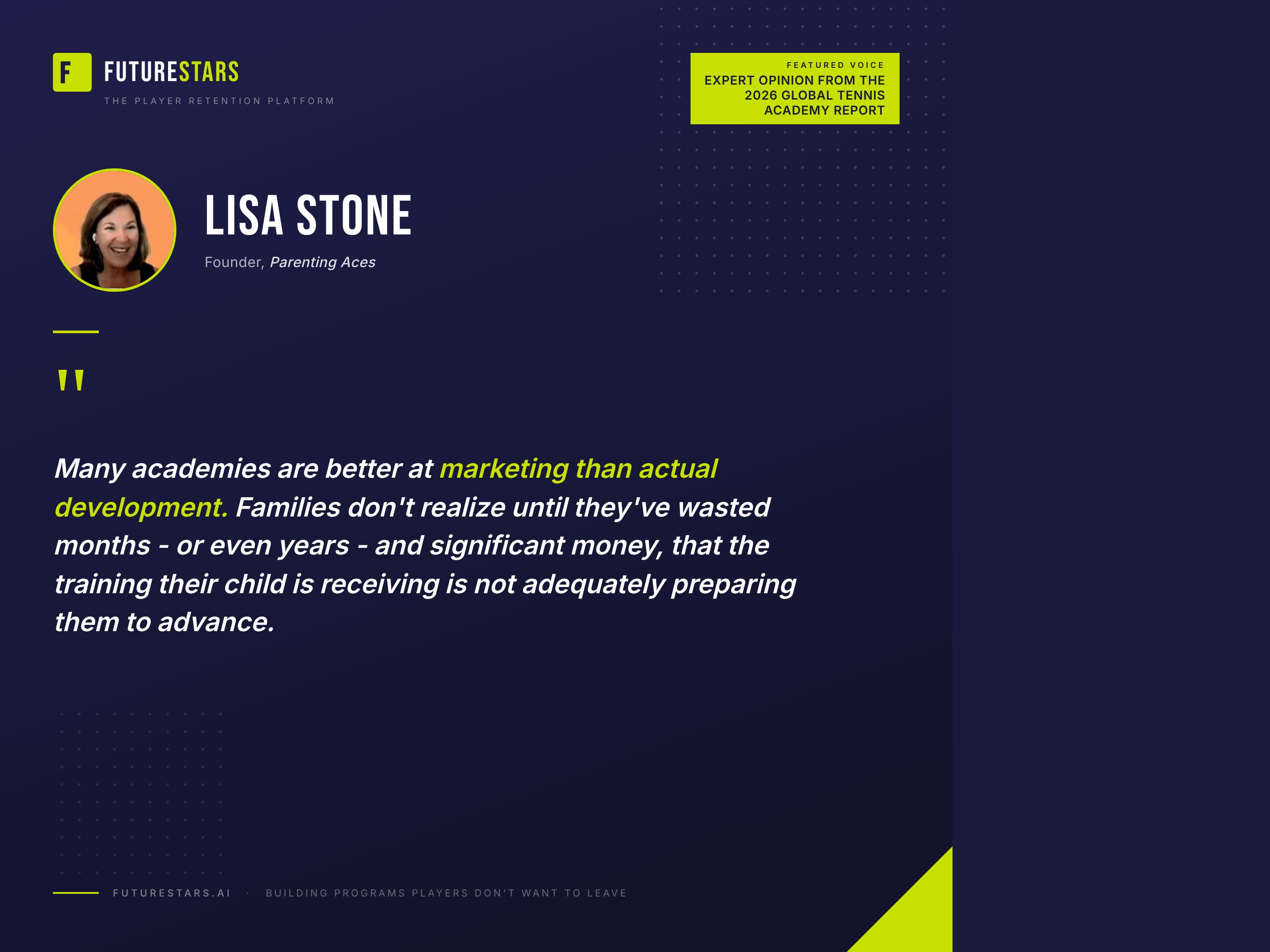
This is the trust problem underneath the retention problem. A family can't tell the difference between a program that's developing their kid and one that's just good at selling itself - not until real time has passed and real money has been spent. The programs that close that gap by making development visible early are the ones families end up trusting.
Retention Is a Signal-Detection Problem
Karel Zheng invests in sports technology for a living, and when we asked him where he'd put his money to solve retention, he didn't talk about coaching at all.
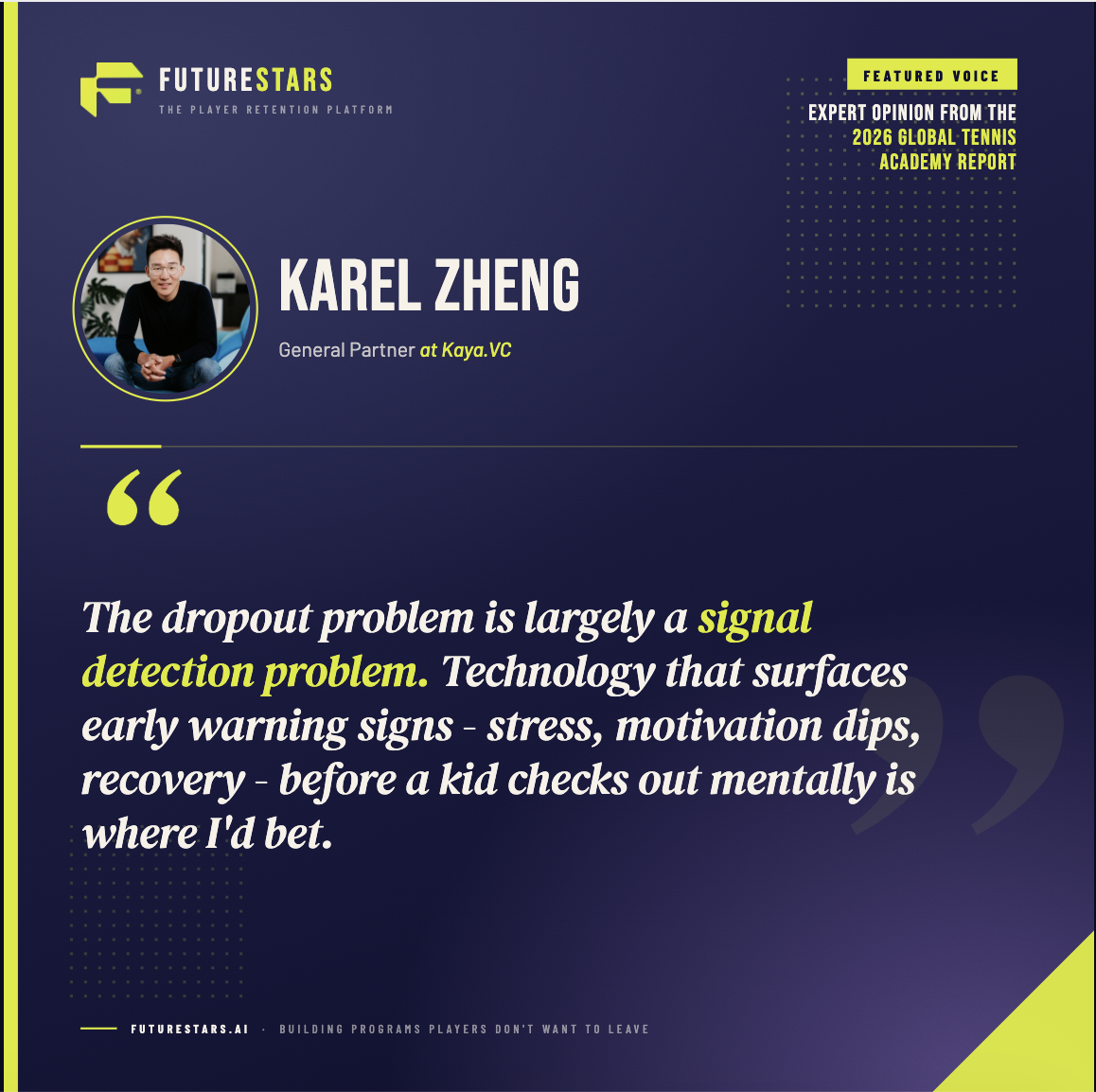
By the time a family says they're leaving, the decision was usually made weeks earlier. The signals - an athlete going quiet, a parent's tone shifting, motivation dipping after a bad result - are almost always there before the exit. Most programs just don't have a system built to catch them.
Where Technology Actually Fits
Philippe Azar, who runs Tennis Hackers, sees the shift already underway among the programs paying attention.

None of these eight people are describing the same problem from the same angle - an investor, a performance architect, a governing executive, an academy founder, a parent advocate, a VC. But they keep landing on the same conclusion. The coaching in youth sports has never been better. What's missing is the system that makes the hours between sessions visible to everyone who's invested in the athlete - the coach, the parent, and the athlete themselves.

That's the gap our full report maps in detail, academy by academy.